

If you’ve ever spent time around an automated pre-roll line, you’ll know one thing pretty quickly: the machine doesn’t care about your feelings—but it absolutely cares about your grind size.
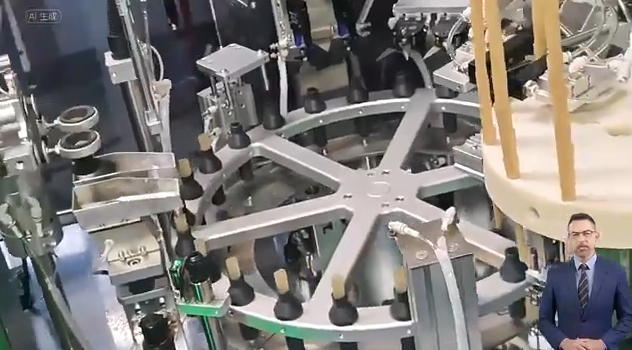
Why Grind Size Matters More Than You Think
Automated pre-roll machines are built on precision. They’re basically very expensive, very fast “repeatability machines.” If your input material isn’t consistent, the machine won’t “fix it”—it will simply expose it.
Think of it like trying to print high-resolution photos using a blurry file. The printer isn’t broken. The file is.
Too fine, and the material behaves like powder. It compacts too tightly, airflow gets weird, and the cones end up overfilled in all the wrong ways.
Too coarse, and suddenly you’re looking at air pockets, uneven density, and pre-rolls that feel like they were packed by someone who gave up halfway through.
The machine doesn’t negotiate. It just reflects your preparation quality with brutal honesty.
So What’s the “Best” Grind Size?
Here’s the uncomfortable truth: there is no single universal “perfect” grind size.
But there is a sweet spot most production engineers quietly agree on after enough trial and error (and a few frustrating production shifts).
For most automated pre-roll systems, a medium, uniform grind works best—something that resembles coarse granulated material rather than powder or chunky fragments.
If you want a mental image, think “sea salt consistency,” not “coffee dust” and definitely not “small gravel.”
What matters more than the exact size is consistency. A slightly imperfect but uniform grind will outperform a “technically correct” but inconsistent batch every single time.
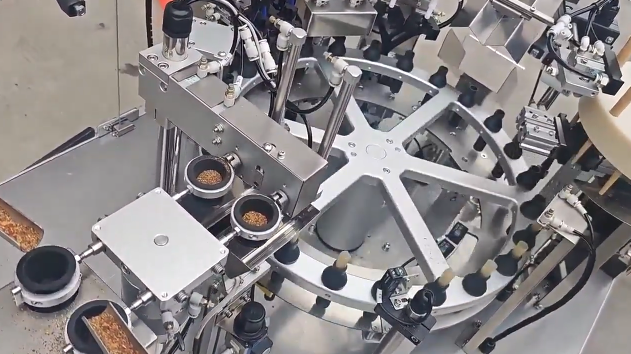
The Real Enemy: Inconsistency
Here’s something people don’t talk about enough: variation is worse than “wrong.”
A batch with mixed particle sizes behaves unpredictably in automated filling systems. The fine particles settle, the coarse ones bridge, and suddenly your fill density looks like a topographic map.
I once saw a production run where everything looked fine at the start, then gradually drifted into underfilled cones by the end of the batch. Turns out the grinder was overheating and subtly changing output texture over time. Nobody noticed until QC showed up with that silent judgmental stare that says, “who signed off on this?”
Moisture and Grind Size Are Dating, Not Independent Variables
Another underrated factor is moisture content. You can’t really separate grind size from humidity behavior.
Even a perfect grind will behave badly if it’s too dry or too sticky. Dry material turns into dust and overflows like sand. Too moist, and it clumps, leading to inconsistent dosing.
In automated systems, this shows up immediately: sensors start compensating, augers struggle, and operators start questioning their life choices.
Practical Advice from the Floor
If you’re running an automated pre-roll line, here’s what actually helps in the real world:
-
Stick to one grinder setting per production batch
-
Sieve or standardize material if consistency is questionable
-
Don’t assume “finer = better” (it usually isn’t)
-
Watch how material flows, not just how it looks
-
And yes—clean your grinder more often than you think you need to
Automated pre-roll machines are impressive, but they’re not magic. They don’t improve bad input—they just scale it.
So if your output ever looks off, don’t immediately blame the machine. Start with the grind size. It’s usually the quiet culprit standing in the corner pretending to be innocent.
And if it turns out not to be the grind size… well, then you’ve earned the right to blame the machine.
Get a Quote
If you have any enquiry about quotation or cooperation,please feel free to email us at saleteam@xinhua-intelligent.com or use the following enquiry form.
Our sales will contact you within 24 hours. Thank you for your interest in our products.